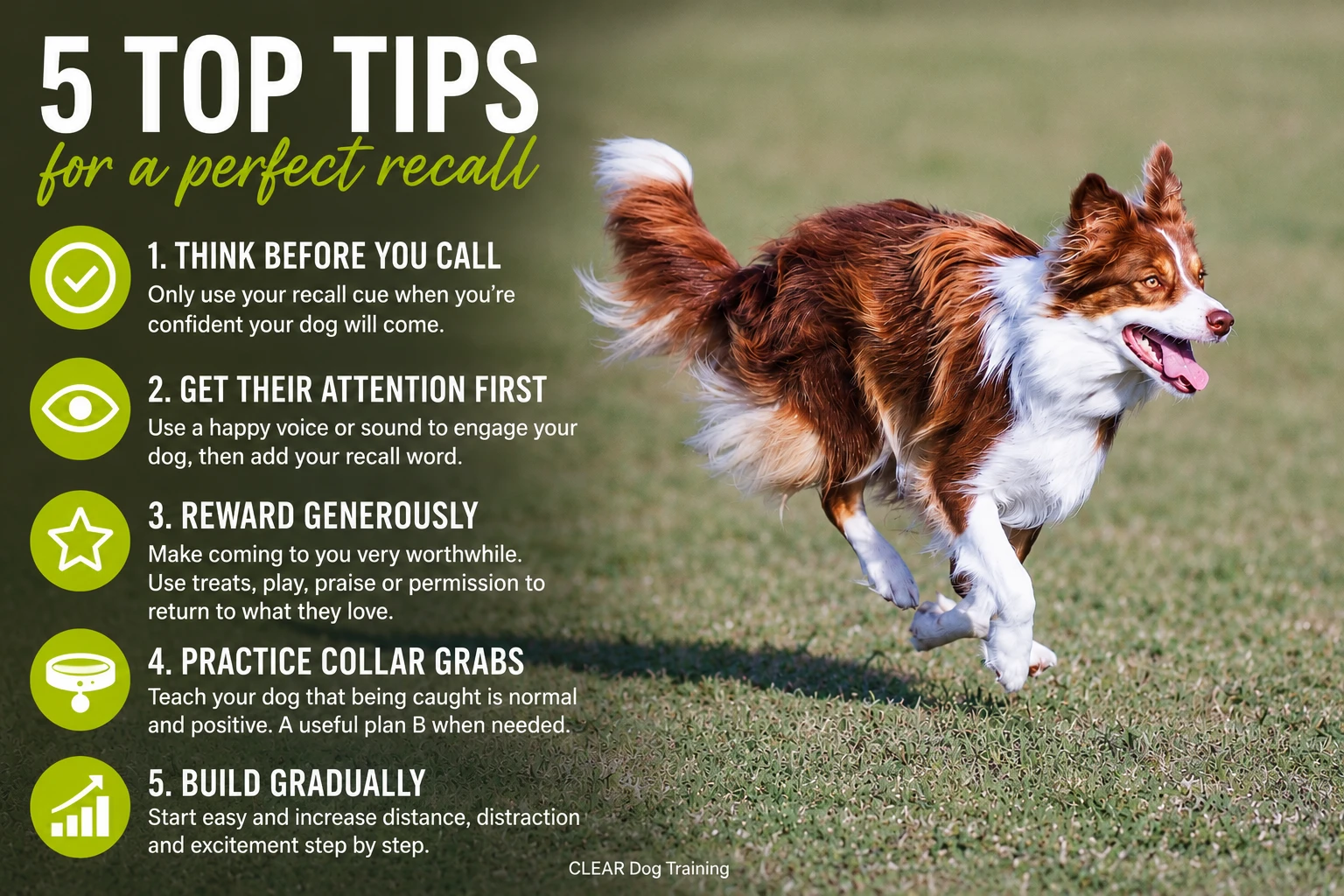
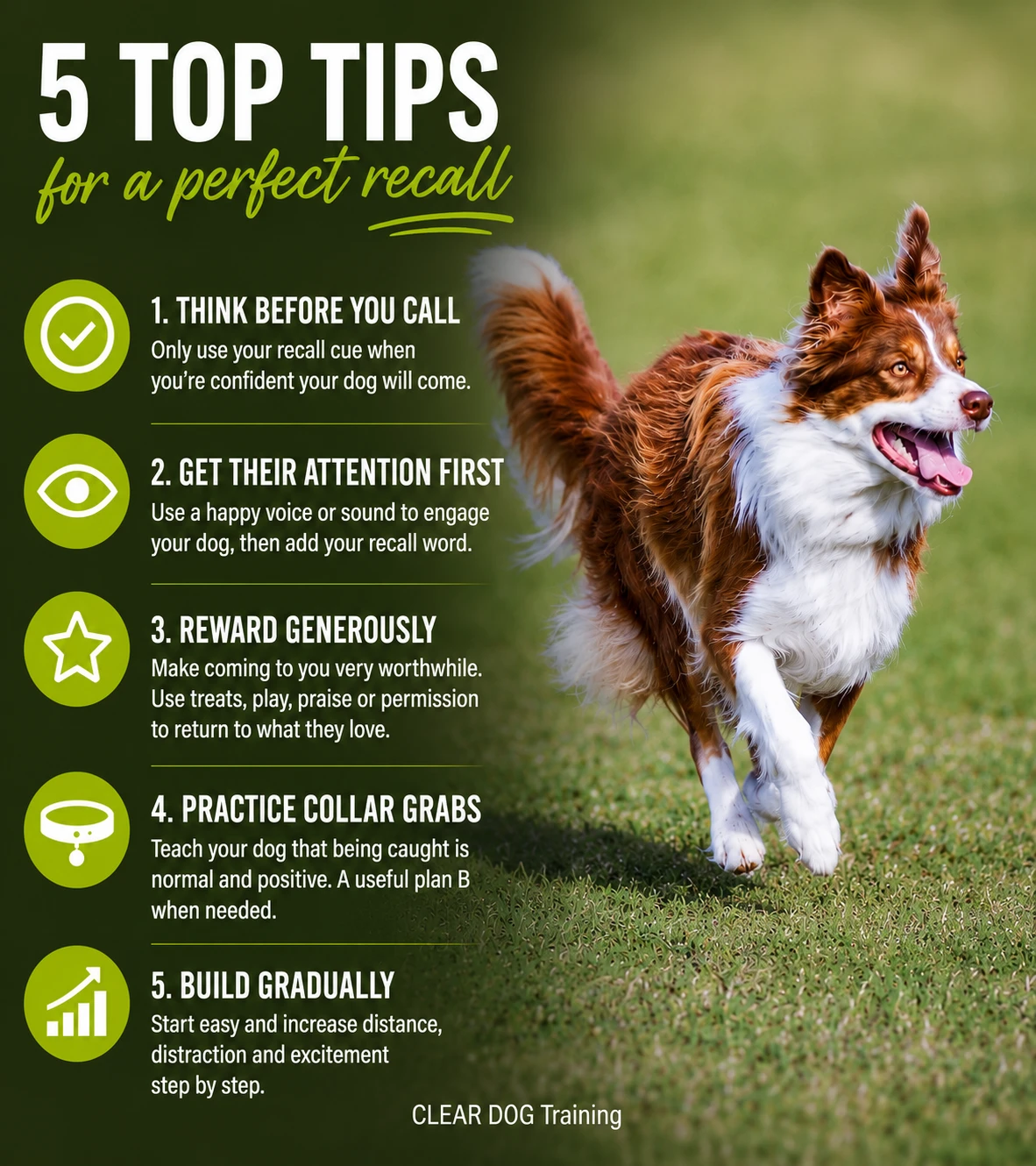
We all want a dog that comes when called. At CLEAR Dog Training, a reliable recall is close to the top of almost every puppy and dog owner’s wish list. But a great recall is not magic. It is a learned behaviour — one that is built carefully over time through repetition, reinforcement and smart training. Many leading trainers recommend heavily rewarding recalls throughout puppyhood and adolescence. In practical terms, that means making coming to you one of the best deals in your dog’s life. Think before you call. One of the biggest mistakes owners make is calling their dog when they already suspect the dog may not come. Every time a dog ignores a recall cue, the behaviour of not coming becomes more rehearsed.
Before you call your dog, stop and assess the situation. Is your puppy genuinely likely to succeed? A puppy coming to you in the kitchen when it is hungry and you have food is one level of difficulty. A puppy coming away from other dogs at a busy dog park is something entirely different. That second situation may simply be beyond your puppy’s current skill level. Good recall training is about setting your dog up to win.
Start with easy wins
Reliable recalls are built progressively. Start in low-distraction environments:
– Inside the house
– In the backyard
– On quiet walks
– Around mild distractions
Then slowly increase the level of difficulty as your puppy succeeds. Too much distraction too soon is one of the fastest ways to damage a recall. Distance, distraction and excitement all matter. If your puppy struggles, simply make the exercise easier again or use a lead as backup.
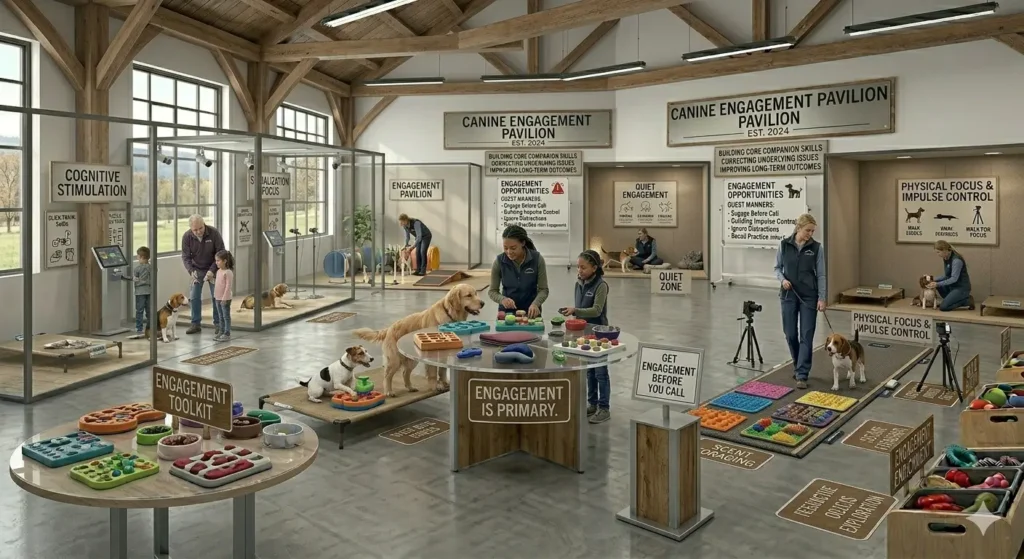
Get engagement before you call
If you are not sure your puppy will respond, first work on reconnecting with it. Many breeders and trainers use a happy voice, playful movement or a cheerful “puppy, puppy” sound to regain attention before giving the recall cue. If your puppy looks at you, engages and starts moving towards you, then give your recall word — such as “come” or “here”. Call when you believe you are likely to succeed. If you are not confident, calmly go and get your puppy instead. Management is part of good dog training. Long lines, fenced areas and controlled setups are excellent tools while recalls are still developing.
Reward generously
For young dogs especially, recalls should predict something worthwhile. Food, toys, praise, games and even permission to return to play can all become powerful rewards. One common mistake is only calling the dog when fun is about to end. Sometimes call your puppy over, reward warmly, then happily release it back to exploring or playing. That helps prevent the dog learning that “come” always means the fun stops. A good recall should feel rewarding, not disappointing.
Teach collar grabs early
Another simple exercise that helps enormously is the collar grab. Start inside the house with treats handy. Offer your puppy a treat and, while it is happily nibbling, gently run your hand along the neck and briefly take hold of the collar. Then reward again. Repeat this often in calm situations. This exercise teaches your puppy that being gently caught is normal and positive. It also gives you a safe Plan B when your puppy is too distracted to respond immediately. As an added bonus, it helps puppies become more comfortable with hands near their collar and face.
Build a recall your dog loves
A dream recall is built one successful repetition at a time. Call less. Reward more. And protect your recall cue by using it thoughtfully. Over time, your dog learns that coming back to you is safe, rewarding and always worth it.