
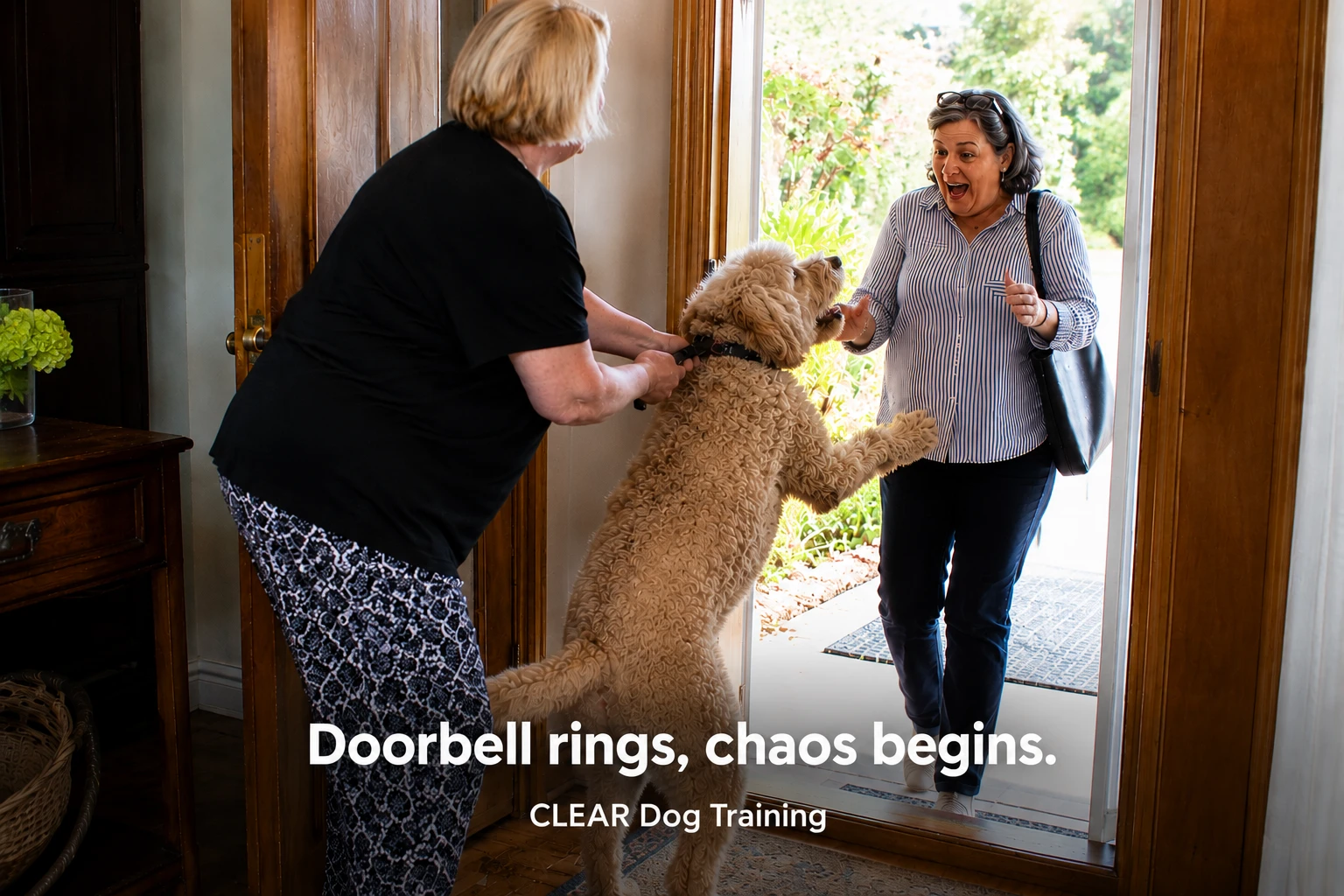
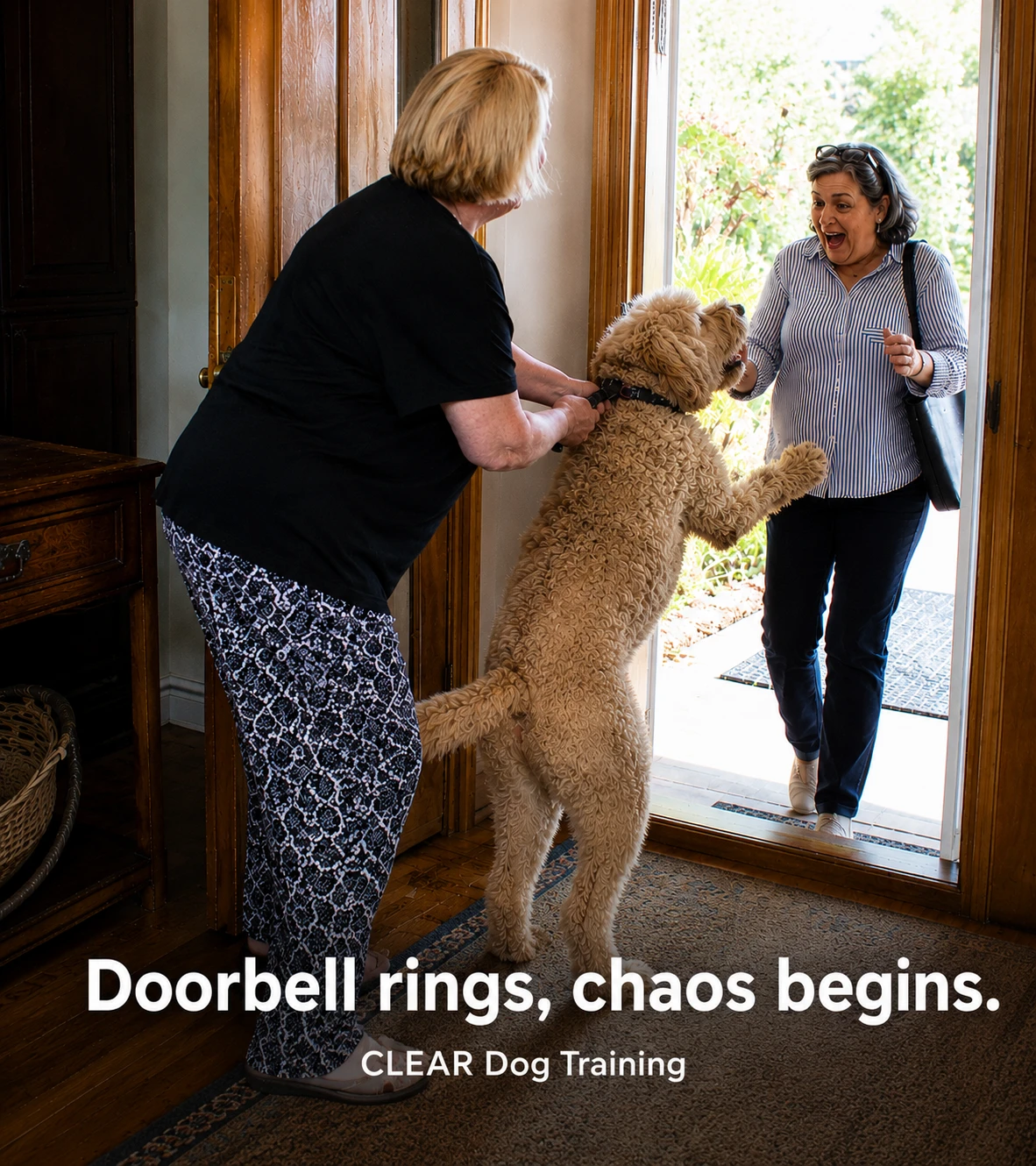
Doorbell rings. You open the front door, excited to invite somebody in for a coffee and a catch-up. Meanwhile, your dog is barking, leaping around, climbing on the visitor and turning that peaceful cup of coffee into complete chaos. Most dog owners know the feeling. And yes, it can feel embarrassing. Especially when your dog ignores you, keeps jumping all over people or carries on like a pork chop while you are desperately trying to act like everything is under control. At CLEAR Dog Training, problems around visitors are one of the most common things we help owners with. The good news?Most dogs are not being “bad”. They are simply over-excited. For many dogs, visitors are rare, exciting, emotional events. And the less often visitors arrive, the bigger deal it can become.
Why dogs get so excited about visitors
Humans understand that visitors calmly arrive, sit down and have a chat. Dogs often see things very differently.
A visitor means:
Excitement.
Movement.
Noise.
Attention.
Novelty.
For puppies especially, people arriving at the house can feel incredibly stimulating. And if barking, jumping and frantic behaviour gets repeated often enough, dogs start rehearsing that emotional pattern every single time the doorbell rings. Like many dog-training problems, repetition strengthens behaviour. Dogs get better at whatever they practise.
Train an alternative behaviour
One of the biggest mistakes owners make is trying to control chaos in the middle of chaos. Doorbell rings, Dog loses its mind, Owner starts repeating: “Stop!” – “Off!” , “Come here!” – “Get down!” Meanwhile, the dog is far too excited to think clearly.
At CLEAR Dog Training, we often teach dogs an alternative routine instead.
For example:
Doorbell rings.
Dog gets calmly guided to another room.
Dog receives a chew or enrichment item.
Visitor comes inside and settles first.
This gives everybody a chance to breathe Importantly, it also allows the excitement level to come down before the dog re-enters the room. Often by the time the dog comes back out, the “OMG VISITOR!” moment has already passed. That is a huge win.
Set the situation up properly
One important point: If your dog is unlikely to come when called once the doorbell rings, do not stand there repeating cues while the visitor waits awkwardly outside. Keep a lead handy near the door. Clip it on calmly. Guide the dog to the room where the chews are kept. Channel a win. Do not accidentally rehearse ignoring. If owners repeatedly call dogs in highly exciting situations and dogs ignore them, that behaviour gets stronger over time. Management is not failure. Smart management is often the fastest path to success. Importantly, putting the dog in another room with a chew also gives owners a chance to settle visitors in and explain the plan calmly before the dog comes back out.
For example: “Look, we’re really working on his excitement levels at the moment. When he comes back in, can you just say hello quietly, maybe one little pat, then mostly ignore him for a few minutes?” That calm, low-key approach can make a huge difference. The goal is for dogs to gradually learn that visitors are just an everyday part of life and no big deal. And importantly, if somebody genuinely is not comfortable around dogs, there is absolutely nothing wrong with leaving the dog happily occupied in another room with its chew. Not every visitor needs to become a training exercise.
Teach calmness before you need it
Another exercise we love at CLEAR Dog Training is a simple settle exercise. With the dog on lead, place your foot gently halfway along the lead so the dog cannot jump all over you or wander endlessly. The moment the dog relaxes, softens or settles quietly, calmly place a treat on the ground. No excitement, No hype, No big performance. Just quiet reinforcement for calm behaviour. We start this in peaceful environments first. Then gradually build up to mild distractions. Eventually, it becomes an incredibly useful management tool around visitors. The dog can still be part of the social situation without practising chaos.
Use your visitors as training opportunities
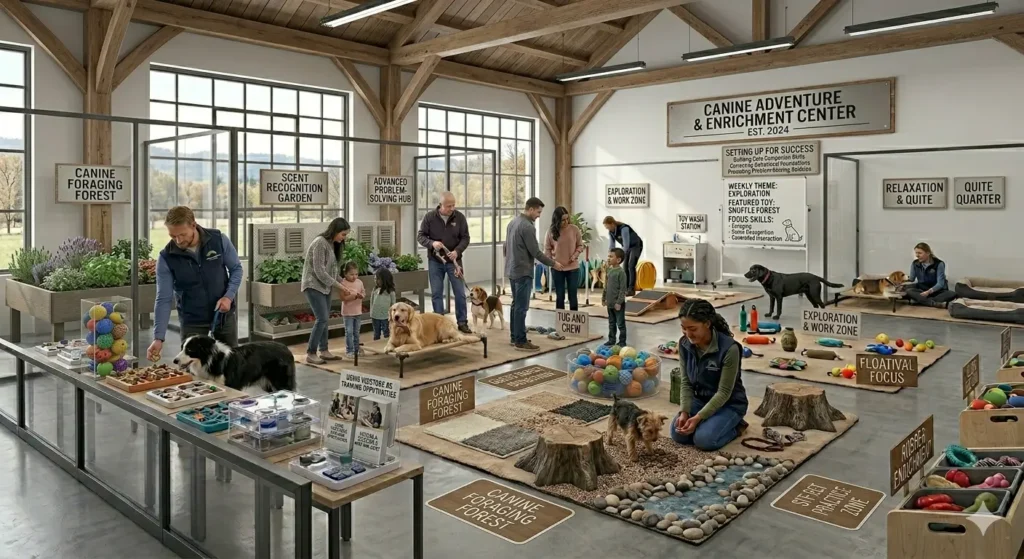
If you do not get many visitors, make use of the ones you do get. Ask friends or family to help. Have them step outside and come back in again. Practise calm greetings. Practise settle exercises. Practise going to chews. Most people are happy to help once they understand the plan. Good dog training often comes down to smart repetition. And the more successful repetitions your dog has, the more normal calm behaviour starts to feel.