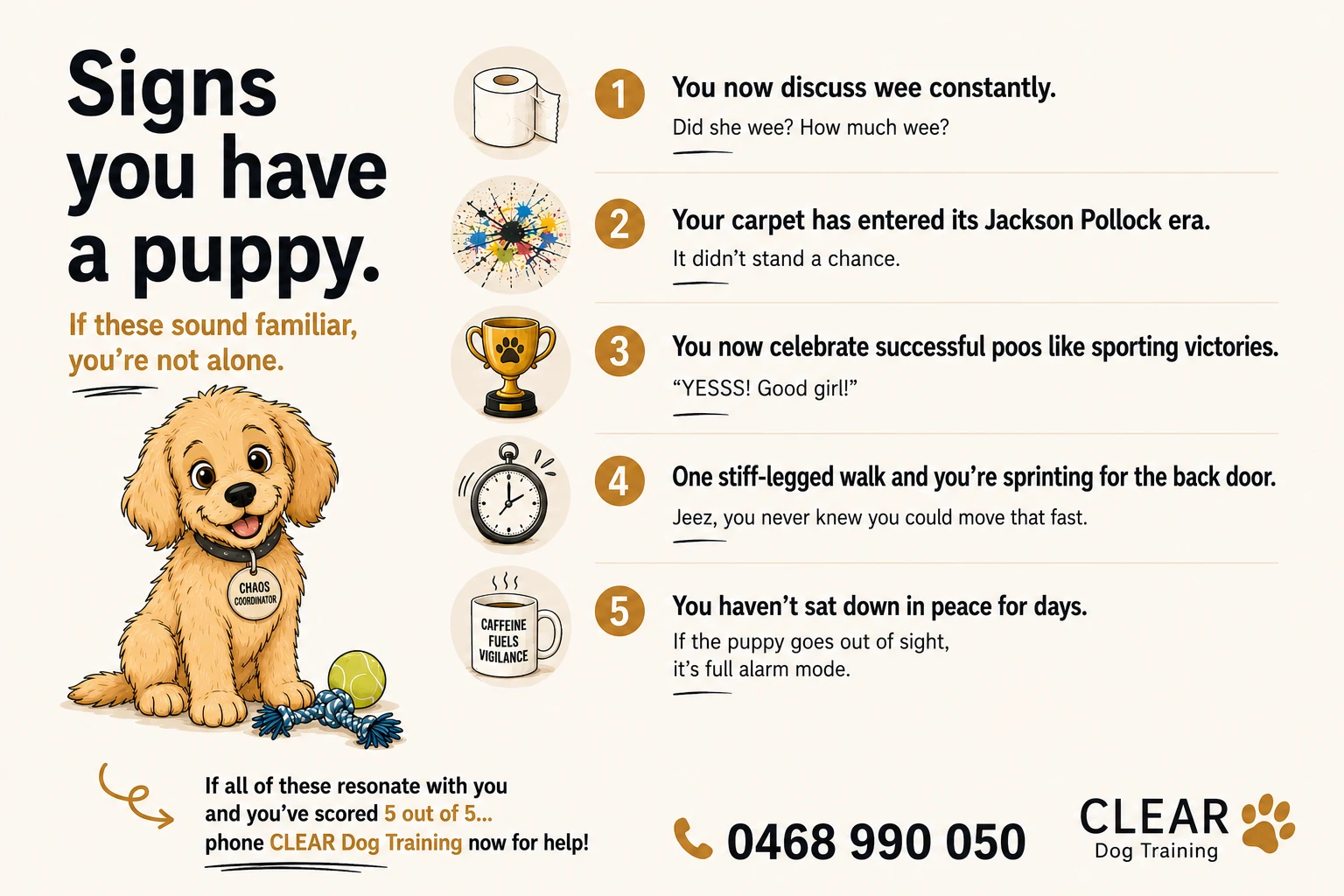
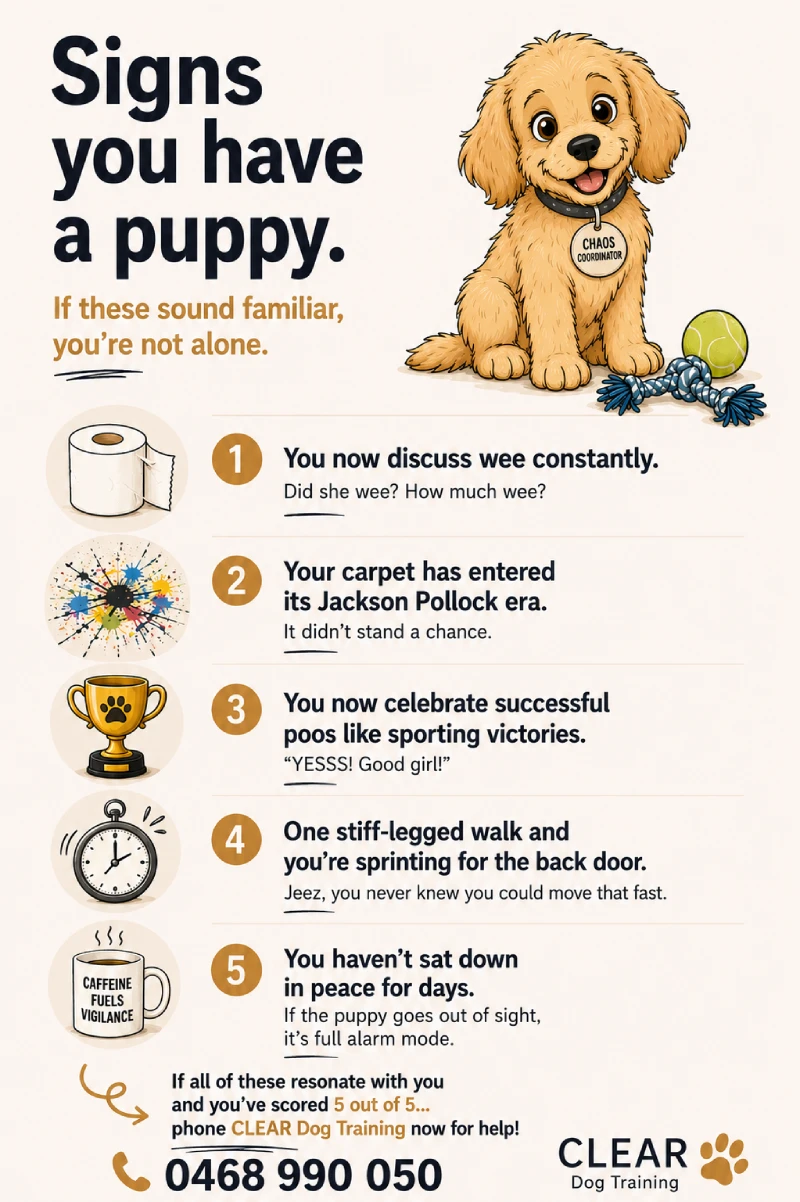
When people imagine getting a puppy, they picture cuddles, cute photos and happy walks. What they don’t picture is constantly picking up poo, mopping up pee and wondering why on earth the puppy has just squatted on the carpet five minutes after being outside. At CLEAR Dog Training, one of the things we hear most often from new puppy owners is: “We don’t know what we’re doing wrong. This puppy is peeing everywhere.” And honestly? That’s more normal than you might think. Puppies are babies. They aren’t born understanding where they should toilet, and some puppies simply take longer than others to figure it out.
The good news is that most toilet training problems improve enormously with:
• good management
• consistency
• supervision
• patience
• and realistic expectations
Management matters more than people think
One of the biggest mistakes people make is giving puppies too much freedom too early. If your puppy is wandering around the house unsupervised, chances are it will eventually disappear behind the lounge or into the spare room for a sneaky squat.
During toilet training:
• use crates
• use playpens
• tether under supervision if needed
• keep the puppy near you
The fewer accidents your puppy rehearses indoors, the faster toilet training usually progresses. One thing we often do with young puppies is set up a playpen over lino or another easy-clean surface. It keeps the puppy off carpet, limits wandering and makes life much easier during those early weeks. It can also help to temporarily roll up valuable rugs and remove soft mats if needed. Puppies often love toileting on soft, absorbent surfaces.
Crates can help — but they aren’t magic
Most puppies naturally prefer not to toilet where they sleep, which is why crate training can help enormously.
The crate should be:
• big enough to stand up and turn around
• but not so enormous that the puppy can sleep at one end and toilet at the other
That said, not all puppies read the manual. Some puppies become quite comfortable lying in urine or faeces, especially if they were raised in kennels, concrete runs or environments where they had little choice but to toilet where they slept. These puppies often need even more supervision, structure and patience.
Learn your puppy’s routine
Most puppies need to toilet:
• after meals
• after drinks
• after naps
• after play
• after excitement
Young puppies have tiny bladders and immature brains. Holding on is genuinely difficult for them. Some puppies sleep through the night beautifully. Others need several overnight toilet trips for a while.
One of the biggest mistakes owners make
The owner comes home. The puppy has been outside for hours. The owner thinks: “Surely the puppy has already peed.” So they let the puppy straight inside. Five minutes later… the puppy squats on the carpet. Why? Because many puppies have actually been asleep while outside alone. Then movement and excitement trigger the urge to toilet once they come indoors. This is why we strongly recommend taking the puppy outside and quietly wandering around with it for five minutes before letting it inside.
One little trick that helps many puppies is taking them right to the far side of the lawn before letting them wander back. If the puppy genuinely needs to go, there’s a good chance it will toilet while wandering back across the grass instead of racing straight inside. We also often simply pick puppies up quietly or use neutral cues like “outside” or “toilet” rather than repeatedly calling “come” if the puppy isn’t yet enthusiastic about heading outdoors.
Keep toilet breaks calm and boring
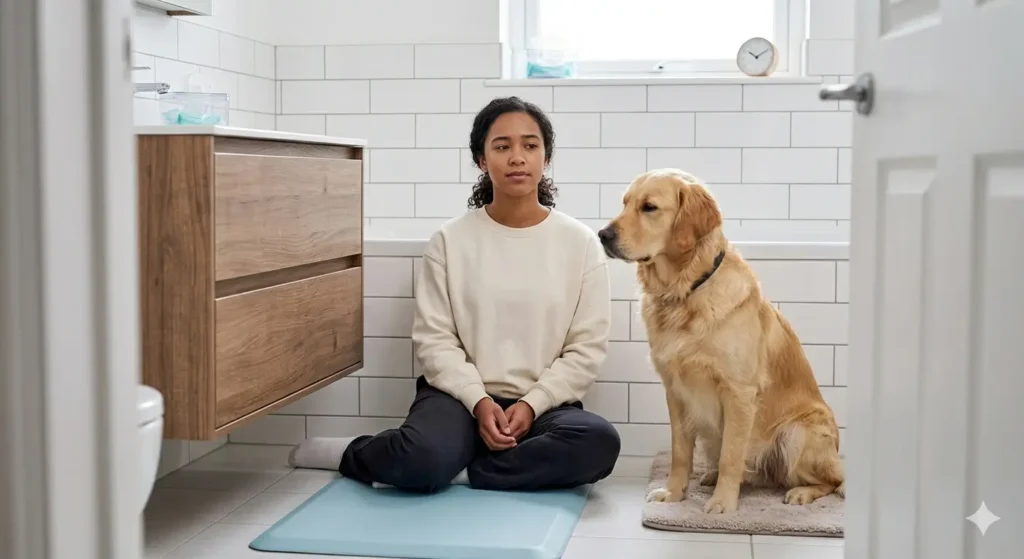
Especially overnight. Pick the puppy up quietly if needed. Take it outside. Wander around calmly for a few minutes. Then straight back inside. Don’t accidentally turn 2am into a puppy party.
Reward the right choice
When your puppy toilets outside, quietly reward it immediately.
A simple:
• “Yes!”
• small treat
• gentle praise
…right after the puppy finishes helps the puppy understand it made the correct choice.
Be careful not to accidentally punish your puppy
If a puppy is repeatedly startled or scolded while toileting indoors, some puppies begin hiding to toilet. That’s when owners start saying: “She waits until I’m not looking.” If you catch your puppy in the act, interrupt gently: “Hey!” Then calmly take the puppy outside. No yelling. No chasing. No anger.
Pee pads: helpful or confusing?
Pee pads absolutely have their place, especially for apartment living or unavoidable long stretches indoors. But they can also teach puppies that toileting on soft surfaces is acceptable — and unfortunately rugs and carpets often feel very similar. If you use pee pads, try gradually moving them closer to the door and work towards outdoor toileting where possible.
Most importantly… be patient
Toilet training is rarely a straight line. Puppies improve, backslide, improve again and then suddenly seem to “get it” almost overnight. If things feel difficult at times, you’re not alone. You’re raising a baby dog — and that takes time, consistency and patience.