
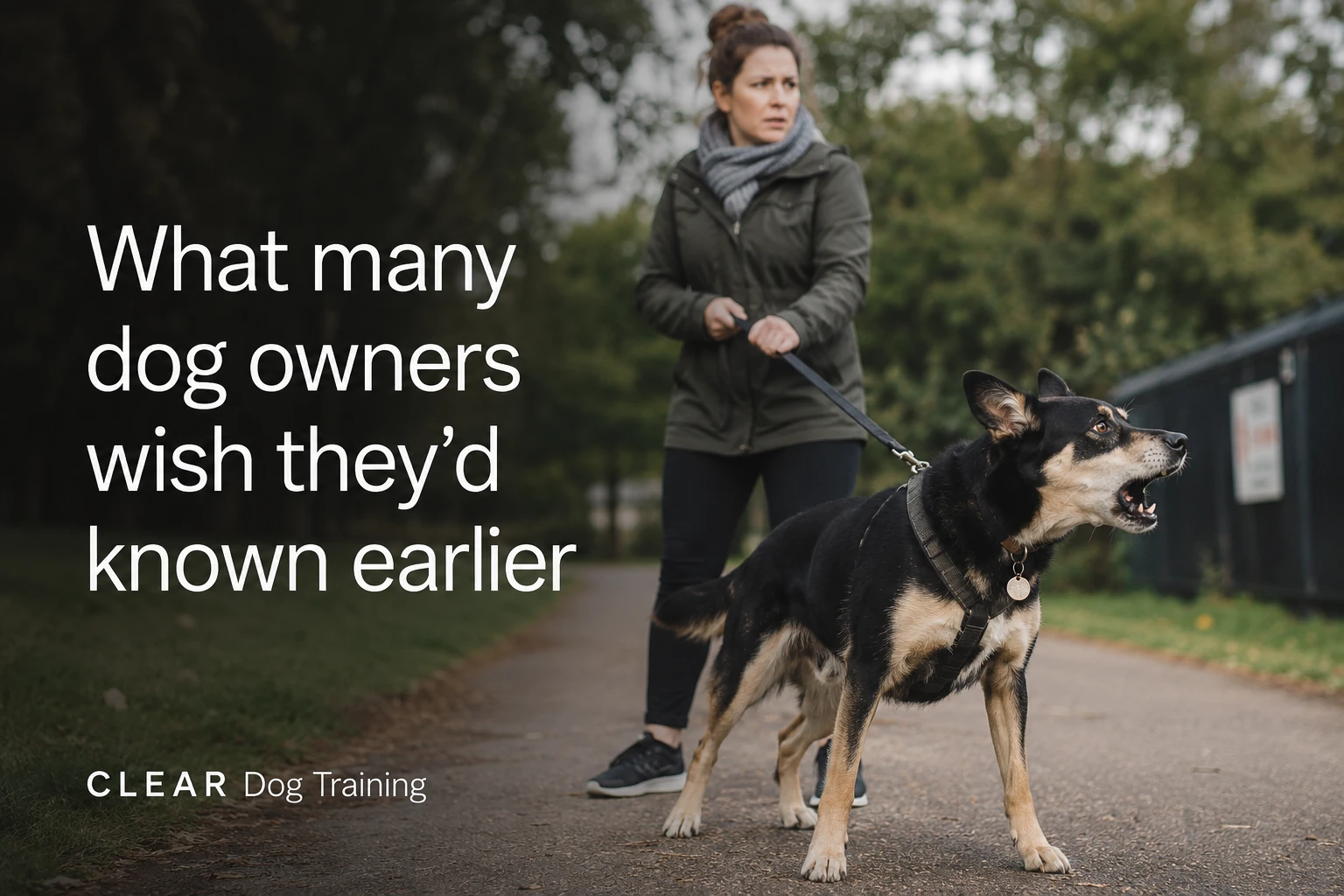
Nobody brings home a puppy hoping for barking, lunging, growling and stress later down the track. We picture relaxed walks, friendly visitors, café outings and a dog that can calmly move through the world beside us. Yet many owners find themselves shocked months later when their once-sweet puppy suddenly starts reacting to strangers, barking at dogs on lead, charging fences or becoming overwhelmed by everyday life. And often the question becomes:
“What did I do wrong?” In many cases, the foundations for future reactivity start long before owners ever attend a training class. It starts before the puppy even comes home. Many lovely dogs have owners who are doing their absolute best — but sometimes the odds were stacked against them from the beginning through genetics, breeding, poor early socialisation or unsuitable puppy selection. The good news? While nobody can guarantee a perfectly non-reactive dog, thoughtful choices early on can dramatically stack the odds in your favour.
Don’t just buy a puppy. Investigate one.
This is the uncomfortable part of the conversation — but it matters enormously. A puppy’s genetics and early environment play a huge role in future temperament. Some dogs are naturally more resilient, social and environmentally stable. Others may be genetically predisposed toward nervousness, guarding behaviour, sensitivity, hypervigilance or reactivity. Good training helps enormously. Thoughtful socialisation and sensible exposure to the world matter too. But experienced trainers also know genetics can heavily influence how naturally resilient or reactive a dog may become. Experienced trainers and breeders see this all the time. Two puppies from the same litter can receive similar raising, training and love, yet mature into very different dogs. One may be naturally resilient and easygoing, while another may be far more sensitive, intense or reactive despite excellent handling. Many owners are shocked by how dramatically two seemingly similar puppies can mature into very different adult dogs. That’s why choosing the right puppy is about far more than pretty online photos or a breeder saying the puppies are “lovely.”
Do your homework
Meet the parents if possible. Observe them carefully.
Can they settle calmly?
Are they relaxed around people?
Do they bark frantically at every movement?
Have they experienced life outside their property?
And don’t stop there. Talk to people who own dogs from previous litters or related lines. Ask honest questions. Look beyond titles and achievements. A high-performing working or sport dog is not automatically an easy pet dog. Choose a reputable breeder with a long history of producing stable, environmentally sound dogs suited to family life. If you are looking for a registered pedigree puppy, organisations such as Dogs Australia and breeder directories like Dogz Online can be useful starting points for research. But registration alone is not a guarantee of temperament, suitability or good socialisation practices. Buyers should still do their own due diligence, ask questions, meet dogs where possible and carefully investigate bloodlines, temperament and breeder reputation before committing to a puppy.
Breed matters too
This can be an uncomfortable topic, but it is an important one. Some breeds are naturally more easygoing, social and forgiving than others. Others were specifically developed to be highly alert, environmentally sensitive, protective, suspicious of strangers or quick to react to movement and change. That does not make them bad dogs. But it does mean some breeds — and some bloodlines within breeds — can be far more challenging for inexperienced owners. A highly driven working or guarding breed may look stunning online, but living with one day-to-day can be very different from admiring one on social media. If you are a first-time or less experienced owner, it is worth honestly asking yourself:
– How much dog experience do I really have?
– How much training and management am I realistically prepared to do?
– Do I want a naturally social, easygoing family dog, or a dog bred for high alertness and intensity?
Temperament should never be an afterthought.

Be cautious buying long distance
Buying a puppy long distance is sometimes unavoidable, particularly with popular breeds or specialised lines. But buyers should proceed carefully unless the breeder has an exceptional reputation and extensive proven history. We have worked with owners who purchased working breed puppies sight unseen, only to later discover the parents had extremely limited exposure to the outside world and strong guarding tendencies. In some cases, the puppies arrived under-socialised and genetically predisposed toward reactivity before the owners even knew there was a problem. Often these owners are caring people who simply fell in love with a puppy online and had no idea what questions they should have been asking. It means buyers need good information before making such an important decision. Visit if possible. Meet the dogs. Ask questions. Watch how the dogs behave in real life, not just in carefully selected online photos and videos. Most breeders are genuine people who care deeply about their dogs — but they also naturally love their lines and want to sell puppies. Buyers still need to politely do their own due diligence and make sure the puppy they choose is genuinely suited to their lifestyle and experience level.
Early socialisation still matters enormously
Even the best-bred puppy still needs thoughtful early exposure to the world. Puppies don’t stay blank slates for very long, which is why those early months matter so much. That does not mean taking young puppies to busy dog parks, letting them walk through areas heavily used by unknown dogs or allowing uncontrolled greetings with every dog they see. It means safely exposing your puppy to the sights and sounds it is likely to encounter throughout its life — in a calm and controlled way. For many owners, strategic socialisation simply means letting the puppy safely observe the world.
That might include:
– sitting with your puppy on a blanket watching people and dogs pass by at a distance
– carrying your puppy through shopping areas
– sitting with your puppy in the back of a hatchback watching traffic and everyday life
– calmly exposing your puppy to noises, movement and different environments without overwhelming it
A puppy can learn a great deal simply by quietly watching the world go by. The goal is not to create an overstimulated puppy that thinks every person, dog or moving object is the most exciting thing in the world. The goal is calm confidence. Puppies completely isolated at home until 16 weeks can miss important developmental opportunities during a critical learning period. Puppy socialisation, confidence building and early training during those first few months can have a huge impact on a dog’s future.
Don’t ignore early warning signs
Many reactive dogs do not show serious issues at eight or ten weeks old. In fact, some puppies seem wonderfully social and easy as babies. Then adolescence arrives. Around six to eighteen months of age — often earlier in working breeds — genetic tendencies can begin emerging more strongly. Barking increases. Guarding behaviours appear. The puppy becomes more environmentally aware, more sensitive or more reactive. Owners are often shocked because: “But she was fine as a puppy.” One thing we often tell owners is this: just because your dog develops reactivity does not necessarily mean you have done anything wrong. Some dogs are simply far more genetically predisposed toward nervousness, hypervigilance or reactivity than others. But once those behaviours begin emerging, owners still need to train the dog in front of them and work on calmly modifying the behaviour rather than simply hoping the dog will grow out of it.
If you notice:
– escalating barking
– fixation or staring
– lunging on lead
– overreaction to visitors
– frantic behaviour around dogs
– inability to disengage from triggers
– increasing hypervigilance
Don’t simply hope the dog will “grow out of it.” Get help early. A good trainer or behaviour professional can help you put a calm management and counter-conditioning plan in place before the behaviour becomes deeply rehearsed. Training can improve behaviour enormously, but it cannot always completely erase strong genetic tendencies. That is why choosing the right puppy and starting early matters so much.
Final thoughts
There is no such thing as a perfectly guaranteed puppy. Even well-bred, beautifully raised dogs can still develop behavioural struggles. Most owners do not intentionally create reactive dogs. In fact, many are loving, committed people doing their absolute best. But choosing the right puppy, socialising thoughtfully and getting help early when problems emerge can make an enormous difference to your dog’s future — and your own quality of life. If your puppy or dog is already showing worrying signs such as excessive barking, overreaction to other dogs, fearful behaviour or increasing anxiety around the world, seek professional help early rather than hoping the dog will simply “grow out of it”. The earlier behavioural concerns are addressed, the more options owners usually have — and the less stressful life often becomes for both dog and human. At CLEAR Dog Training in Brisbane, we work with many puppies and adolescent dogs struggling with reactivity, over-arousal and confidence issues. A calm management and training plan tailored to the dog in front of you can make a huge difference — both for your dog and for your own quality of life.