
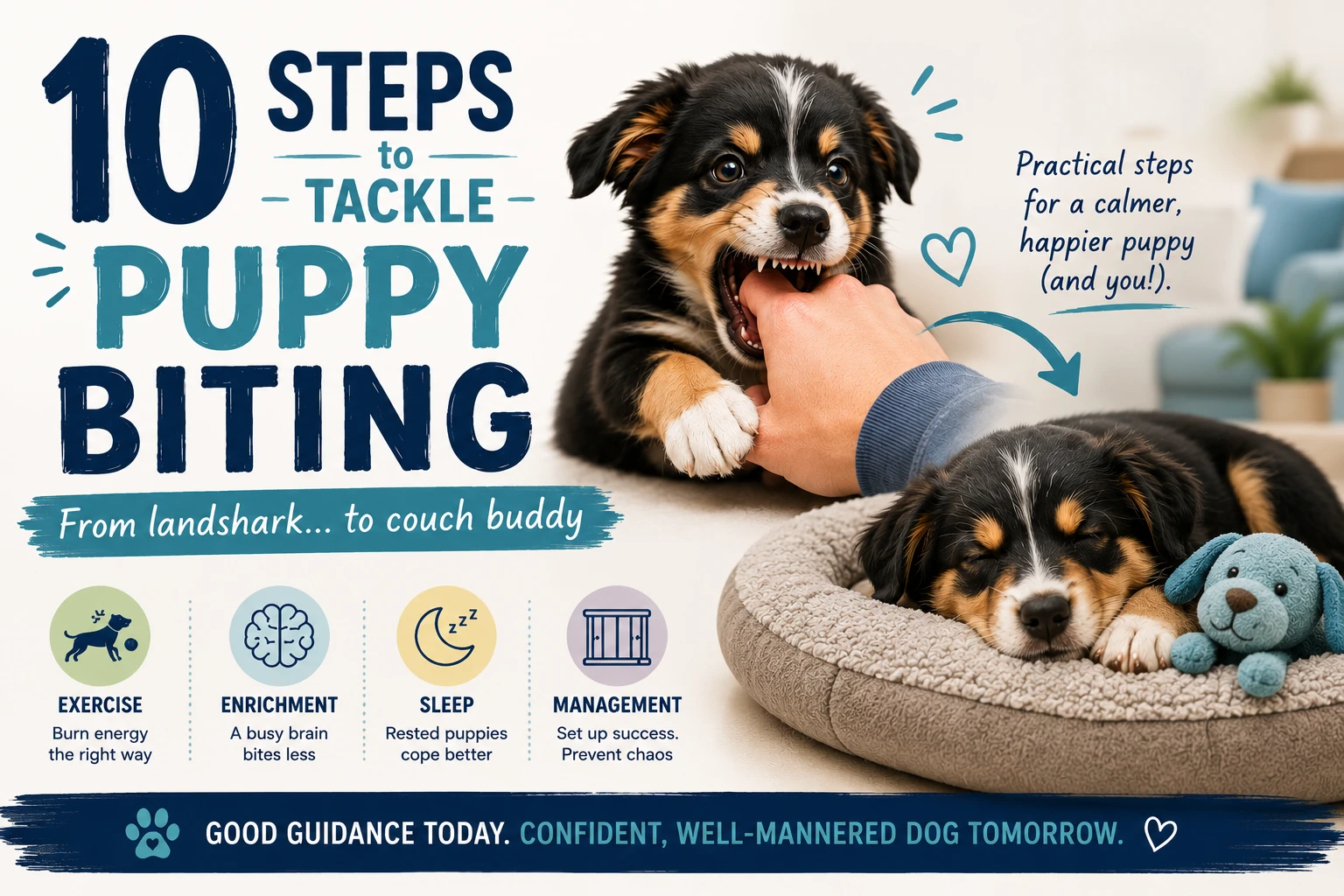
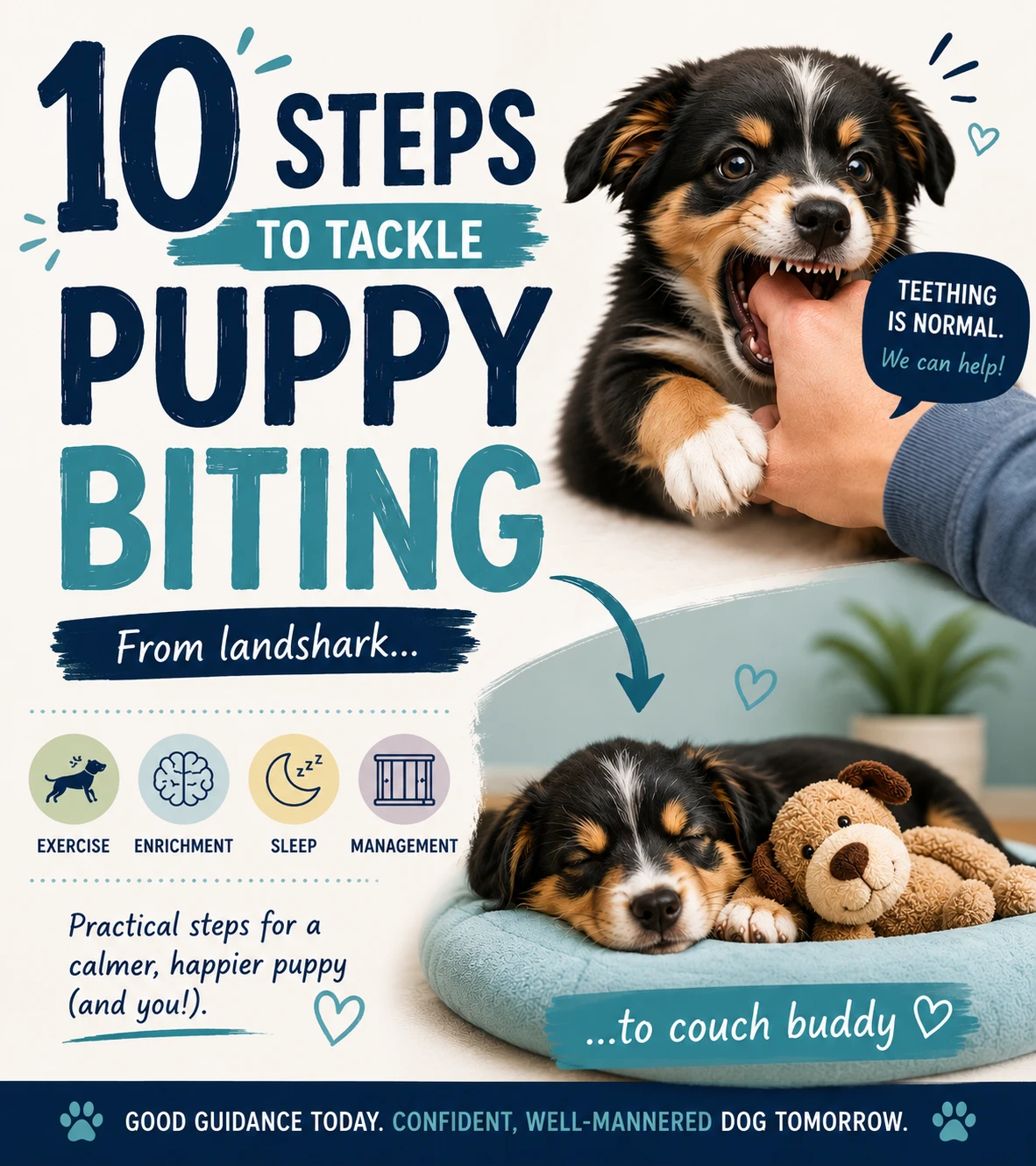
Puppy biting can feel exhausting — especially when your cute little pup suddenly turns into a tiny shark with teeth attached to your ankles, sleeves and hands. The good news? Puppy biting is normal. Puppies explore the world with their mouths. The goal isn’t expecting a baby puppy to never mouth at all — it’s teaching calmer, softer and more appropriate behaviour before bad habits become routines.
Here are 10 practical CLEAR Dog Training tips that can make a huge difference.
1. Exercise the body
– Too much energy often equals too much biting.
– Give your puppy short bursts of age-appropriate play, gentle walks, sniffing games and training sessions throughout the day.
2. Exercise the brain
– Mental enrichment is one of the most important parts of puppy training.
– Try food puzzles, snuffle mats, scatter feeding and simple training games like sit, wait and hand touch. A busy brain bites less.
3. Provide plenty of chew outlets
– Teething puppies need to chew. Rotate safe chew toys and long-lasting chews regularly so your puppy has appropriate outlets for sore gums.
4. Don’t let puppies get overtired
– Overtired puppies are often bitey puppies. If your pup suddenly becomes wild, cranky or extra mouthy, they may simply need a quiet nap and a reset.
5. Learn your puppy’s rhythms
– Puppies cycle through calm and crazy periods during the day.
– Over-arousal and frustration are common triggers for puppy biting. When your puppy is over-hyped, avoid rough play and redirect onto calmer activities like sniffing, chewing or settling.
6. Keep hands out of the game
– Hands should not become chew toys.
– Use toys on ropes, tug toys or toys dragged along the ground so your puppy learns to target the toy — not human skin.
– Rough hand games can accidentally teach puppies that biting people is part of the fun.
7. Reward calm behaviour
– Don’t just focus on stopping bad behaviour. Reward the behaviour you do want.
– Quiet moments, calm sitting, chewing toys and relaxed behaviour should all earn praise, pats or treats.
8. Teach gentle handling
– Practise calm handling when your puppy is relaxed: touch paws, gently hold the collar, handle ears and reward with food.
– This helps build trust and prevents defensive behaviour later.
9. Manage the environment
– Good puppy training is often about prevention.
– Use pens, tethers, baby gates or crates to stop puppies rehearsing biting, zooming and chaos when they’re over-stimulated.
– Management and structure usually work far better than repeated verbal corrections.
10. Get help early if needed
– If puppy biting is escalating, causing stress or becoming difficult to manage, professional help early can make life much easier.