

“Come!”
“Come!”
“COME!”
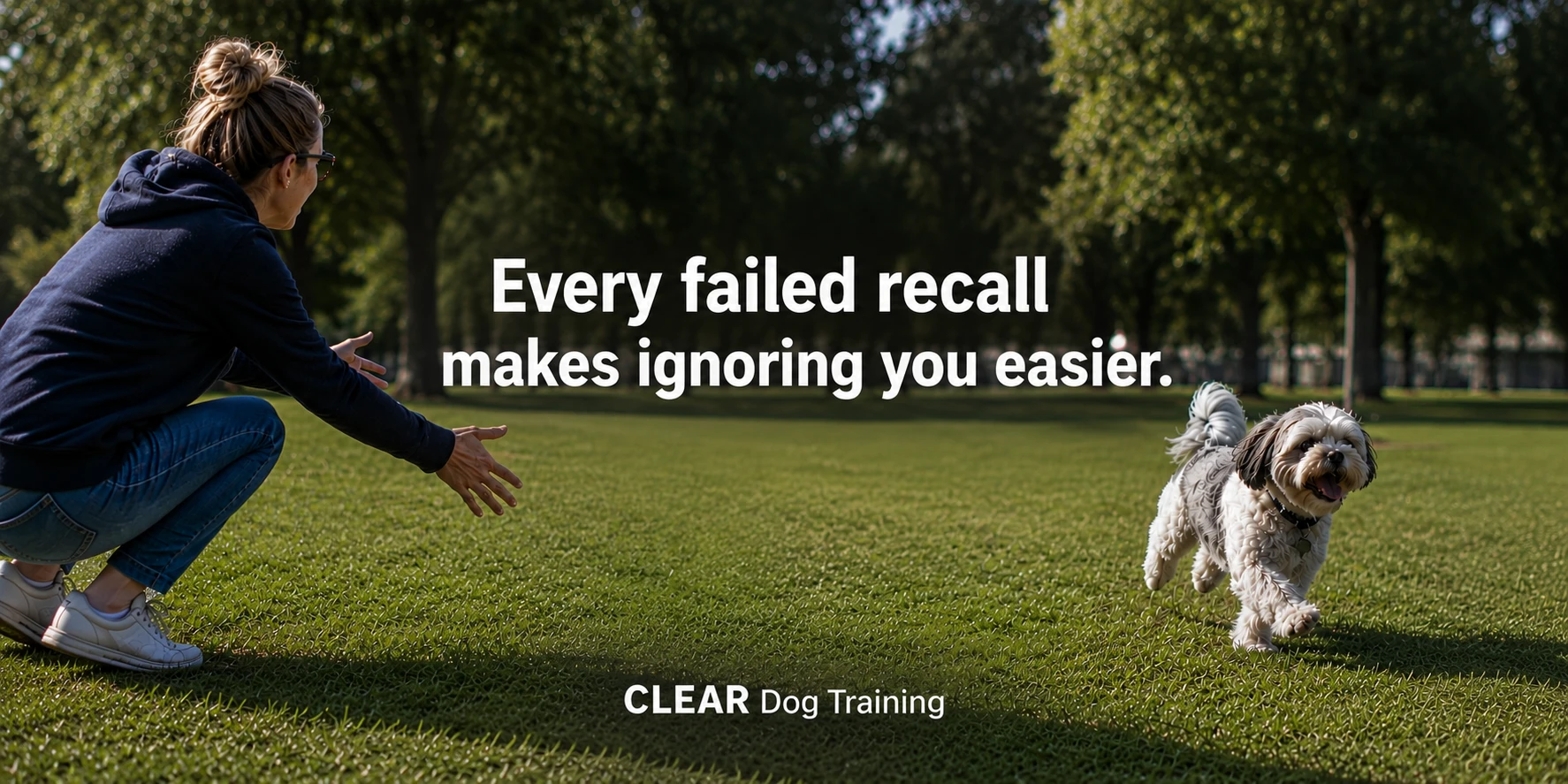
Meanwhile, the dog keeps charging around the beach having the absolute time of its life. Recently at a dog beach, I watched an owner repeatedly call their dog while the dog completely ignored them.At first the calls sounded cheerful. Then hopeful. Then increasingly frustrated. You could almost see the embarrassment building. Calling a dog and having it ignore you — especially in front of other people — is something most owners naturally take to heart. Over the next 15 minutes, the dog was probably called at least a dozen times. It came once. The dog was far too distracted, over-aroused and busy enjoying the environment. But every failed recall taught the dog something important: Coming when called was optional. At CLEAR Dog Training, one of the biggest recall mistakes we see is owners accidentally teaching their dogs that ignoring recall cues works perfectly well. And unfortunately, dogs get very, very good at behaviours that work for them.
Every failed recall is practice
Want to weaken your dog’s recall? Keep calling it when you already know the dog probably is not going to come. Every ignored “come” becomes another rehearsal of: “I can keep doing what I’m doing and nothing happens.” Dogs learn through repetition. And repetition cuts both ways. A reliable recall is not built through nagging, pleading or getting louder. It is built carefully over time through reinforcement, smart training and setting dogs up to succeed.
Don’t call your dog unless you can win
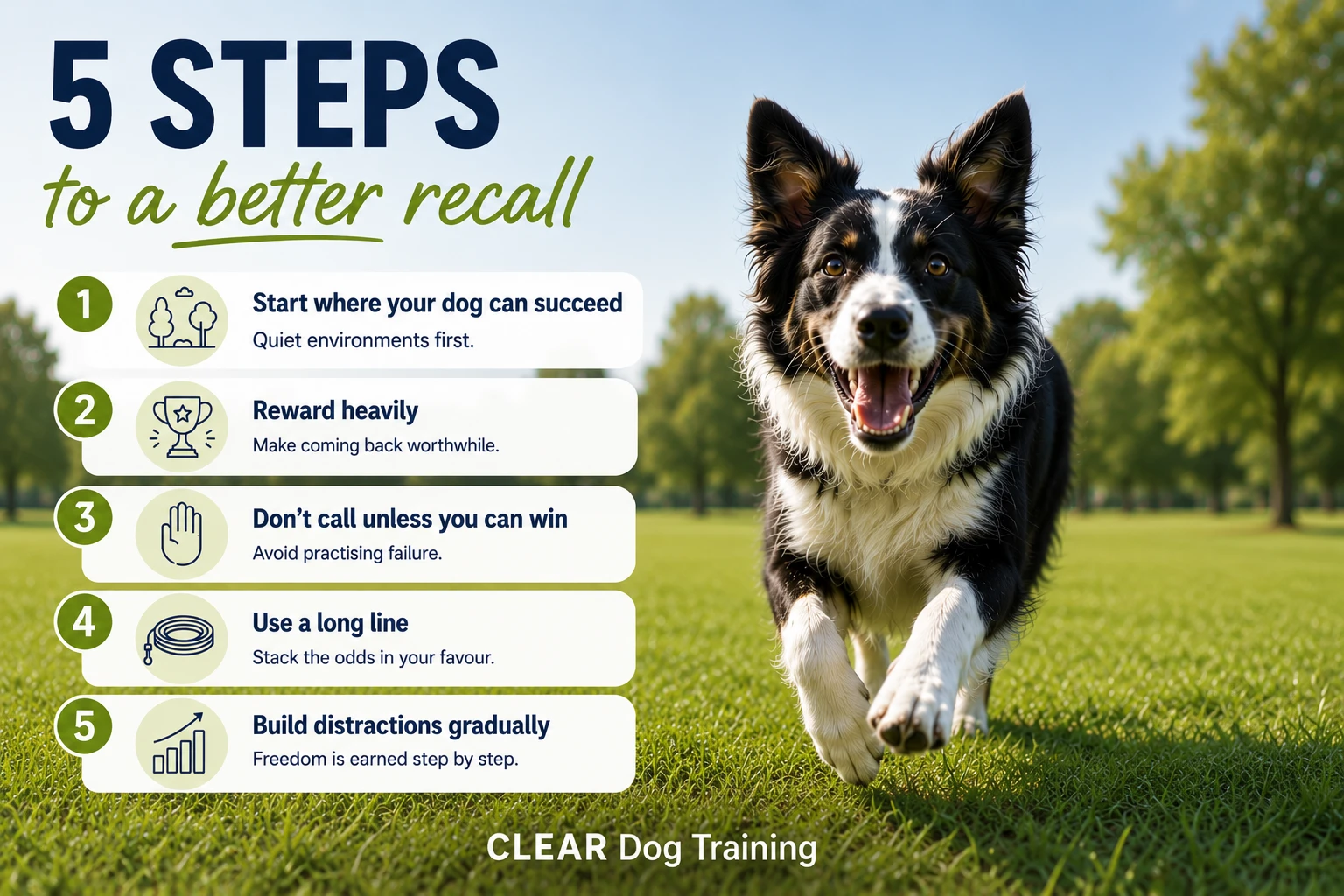
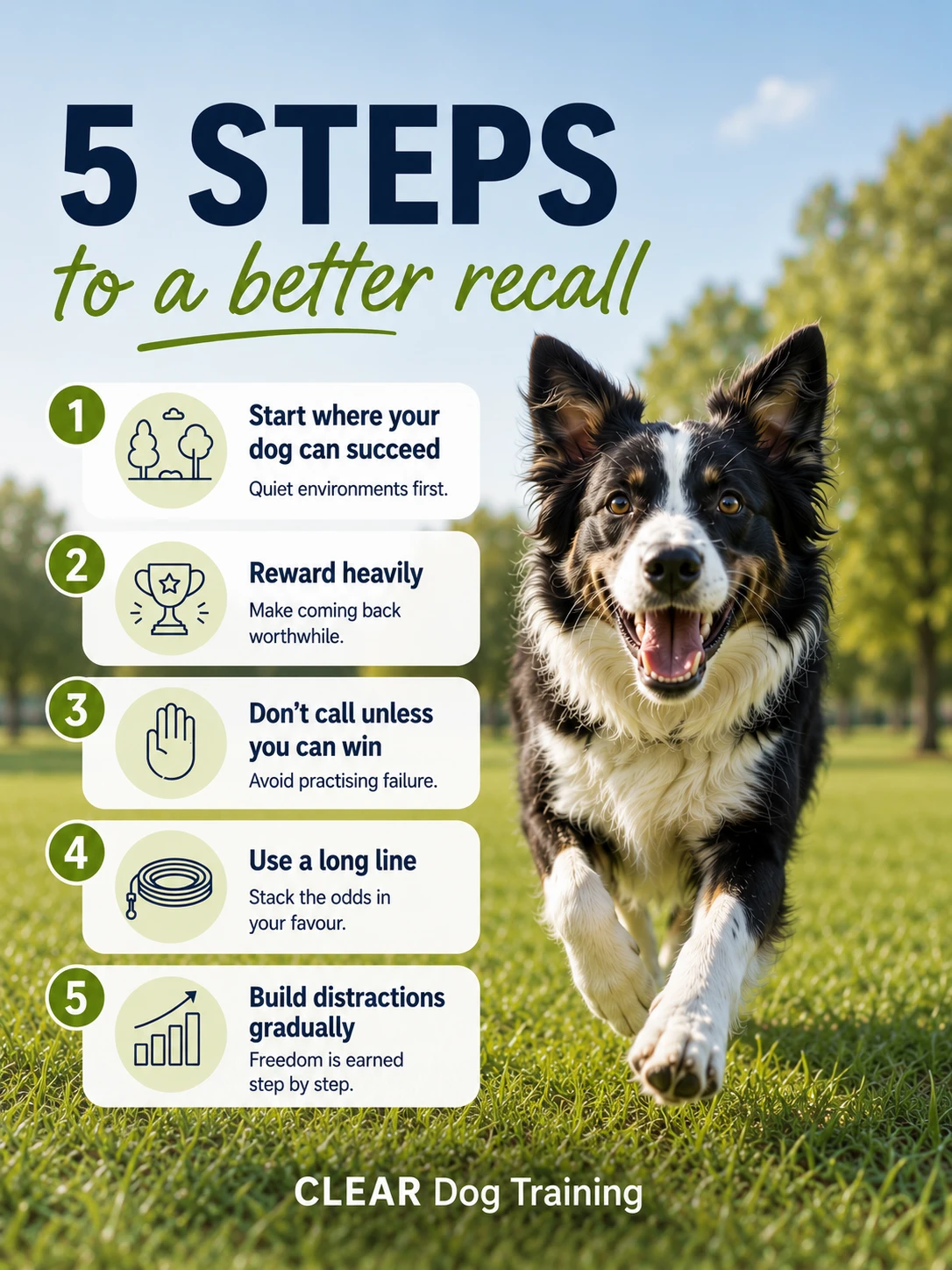
One of the simplest recall tips we give owners at CLEAR Dog Training is this: Don’t call your dog unless you can almost bet the house on it coming. That does not mean never testing your dog. It means setting training up cleverly so the dog learns that coming back is always the right answer. Start in low-distraction environments.
Reward heavily. Make coming back worthwhile. Then slowly increase difficulty as your dog succeeds. Reliable recall is not automatic. Dogs are not born knowing “come” matters. Recall is a learned behaviour built progressively through consistency, good timing and lots of successful repetitions. In fact, good recall training should ideally have a success rate of 95 per cent or higher before you make exercises harder or give dogs more freedom. If recalls are regularly failing, the environment is probably too difficult, the dog is too distracted, or the training has progressed too quickly.
Use a long line to stack the odds in your favour
If you are not fully sure your dog will come, but you think there is a reasonable chance, use a long lead or trailing line. That way, if the dog gets distracted and ignores the recall, you still have a backup plan. You can calmly guide the dog back to you, reward generously, and make sure the exercise still ends successfully. You are not punishing the dog. You are simply preventing the dog from practising ignoring you. The dog learns two important things: Great things happen when it comes when called. And ignoring you does not magically make the exercise disappear. In other words, you are setting the dog up to succeed because you were smarter than the situation.
Teach your dog that being caught is safe
At CLEAR Dog Training, we also like teaching an alternative behaviour called a collar grab. Multiple times a day, calmly walk up to your dog, gently take hold of its collar, feed a treat, then release. Done properly, this teaches the dog that being approached and caught by you is completely normal and nothing to worry about. That matters because many dogs accidentally learn that humans reaching for collars predicts: “The fun is over.” And once dogs start avoiding being caught, recall can quickly unravel. A good collar-grab exercise teaches dogs that your hands coming towards them are safe, positive and predictable. It also gives owners a practical Plan B. If you are in a situation where you genuinely do not think your dog will come, instead of standing there repeatedly calling and getting ignored, calmly go and get the dog. No drama. No anger. No chasing games. Just quietly follow through. Often, smart management beats endless repetition.
Build success before freedom
One of the biggest mistakes owners make is giving dogs too much freedom too early. A dog that comes beautifully in the backyard may struggle badly at the beach, dog park or oval surrounded by smells, movement, birds, other dogs and excitement. That does not make the dog “bad”. It simply means the distraction level has become too difficult. Good recall training is built in layers. Quiet backyard. Quiet park. Mild distractions. Long line work. Bigger distractions. More freedom. Step by step. A strong recall is not built in a weekend. But with smart training, consistency and plenty of successful repetitions, it can become one of the most valuable behaviours your dog ever learns.
— Caroline Strainig, CLEAR Dog Training